Why Is Code Provenance Non-Negotiable in the Age of AI?






As AI generates nearly half of all new code, knowing who—or what—is behind every commit has become the most critical question in software security. This article outlines why identity-based code provenance is the new cornerstone of the software supply chain.
How Much Code Is Being Written by AI?
The scale of AI-driven development is no longer a future prediction; it is a present-day reality. AI coding assistants are now a standard part of the developer workflow, generating a massive volume of code that is impossible to manually vet.
According to recent industry reports, 41% of all code is now AI-generated or AI-assisted, with 82% of developers using AI tools weekly. Tech giants are leading the charge, with 25% of Google's code and 30% of Microsoft's code being written by AI.
What Is the New Attack Surface in an AI-First World?
This explosion in code volume creates a new, massive attack surface. Traditional security tools focus on scanning for vulnerabilities after the code is written. The new risk lies in the commit itself: the moment unverified, potentially malicious code enters the repository.
The speed of AI makes manual code reviews for every line an impossibility. This is not a theoretical risk; software supply chain attacks are projected to cost organizations $60 billion in 2025. The average cost of a major supply chain attack, like SolarWinds, can be as high as 11% of a company's annual revenue.
Why Are SSH Keys and Git Insufficient for Modern Security?
The tools we use to manage code, cloud-based SaaS repos and SSH, were designed for a world of human developers and are fundamentally broken for the age of AI.
They prove possession of a credential, not the identity of the committer. This creates a critical blind spot because:
- Git's Author Field is Unreliable: It can be easily spoofed.
- SSH Keys Prove Possession, Not Identity: A stolen key is indistinguishable from a legitimate developer.
- No Link to Corporate Identity: There is no native connection between a Git commit and a corporate identity provider like Okta or Azure AD.
What Is Code Provenance and Why Is It Now a Requirement?
In a world where you can't trust the origin of the code, you must be able to trust the identity of the committer. This is the principle of code provenance. It's not about stopping AI; it's about making it accountable. Every commit, whether written by a human or an AI, must be cryptographically signed and tied to a verified identity.
This is the core principle behind security frameworks like SLSA (Supply-chain Levels for Software Artifacts), which is now a de facto requirement for selling software to the U.S. government under Executive Order 14028. SLSA's Source Track specifically requires verifiable proof of who authored a change, a requirement that traditional tools cannot meet.
How Can Organizations Secure the AI-Driven Supply Chain?
The only way to secure the AI-driven software supply chain is to shift the security perimeter from the network to the individual, the identity. By ensuring every commit is signed with a hardware-backed, phishing-resistant credential tied to a verified identity, organizations can embrace the speed of AI without sacrificing security.
Learn more about Secure Code signing here or get a demo today to see how you can accelerate developer velocity while keeping your code base secure.
Frequently Asked Questions
Q: What is code provenance?
A: Code provenance is the verifiable, auditable history of where code came from. It answers the question of who wrote the code, when it was written, and how it has been modified. In the age of AI, it means having a cryptographic link between every commit and a verified human or machine identity.
Q: Why is SLSA important for software security?
A: SLSA (Supply-chain Levels for Software Artifacts) is a security framework designed to prevent tampering and improve the integrity of the software supply chain. It is becoming a standard for compliance, particularly for organizations that work with the U.S. government, as it provides a clear roadmap for securing software from development to deployment.
Q: How does AI impact software supply chain security?
A: AI accelerates code generation, which increases the volume of code and reduces the time available for manual review. This creates a larger attack surface for malicious code injection. Without strong identity and provenance controls, it becomes difficult to distinguish between legitimate, AI-assisted code and unauthorized or malicious commits.
As AI generates nearly half of all new code, knowing who—or what—is behind every commit has become the most critical question in software security. This article outlines why identity-based code provenance is the new cornerstone of the software supply chain.
How Much Code Is Being Written by AI?
The scale of AI-driven development is no longer a future prediction; it is a present-day reality. AI coding assistants are now a standard part of the developer workflow, generating a massive volume of code that is impossible to manually vet.
According to recent industry reports, 41% of all code is now AI-generated or AI-assisted, with 82% of developers using AI tools weekly. Tech giants are leading the charge, with 25% of Google's code and 30% of Microsoft's code being written by AI.
What Is the New Attack Surface in an AI-First World?
This explosion in code volume creates a new, massive attack surface. Traditional security tools focus on scanning for vulnerabilities after the code is written. The new risk lies in the commit itself: the moment unverified, potentially malicious code enters the repository.
The speed of AI makes manual code reviews for every line an impossibility. This is not a theoretical risk; software supply chain attacks are projected to cost organizations $60 billion in 2025. The average cost of a major supply chain attack, like SolarWinds, can be as high as 11% of a company's annual revenue.
Why Are SSH Keys and Git Insufficient for Modern Security?
The tools we use to manage code, cloud-based SaaS repos and SSH, were designed for a world of human developers and are fundamentally broken for the age of AI.
They prove possession of a credential, not the identity of the committer. This creates a critical blind spot because:
- Git's Author Field is Unreliable: It can be easily spoofed.
- SSH Keys Prove Possession, Not Identity: A stolen key is indistinguishable from a legitimate developer.
- No Link to Corporate Identity: There is no native connection between a Git commit and a corporate identity provider like Okta or Azure AD.
What Is Code Provenance and Why Is It Now a Requirement?
In a world where you can't trust the origin of the code, you must be able to trust the identity of the committer. This is the principle of code provenance. It's not about stopping AI; it's about making it accountable. Every commit, whether written by a human or an AI, must be cryptographically signed and tied to a verified identity.
This is the core principle behind security frameworks like SLSA (Supply-chain Levels for Software Artifacts), which is now a de facto requirement for selling software to the U.S. government under Executive Order 14028. SLSA's Source Track specifically requires verifiable proof of who authored a change, a requirement that traditional tools cannot meet.
How Can Organizations Secure the AI-Driven Supply Chain?
The only way to secure the AI-driven software supply chain is to shift the security perimeter from the network to the individual, the identity. By ensuring every commit is signed with a hardware-backed, phishing-resistant credential tied to a verified identity, organizations can embrace the speed of AI without sacrificing security.
Learn more about Secure Code signing here or get a demo today to see how you can accelerate developer velocity while keeping your code base secure.
Frequently Asked Questions
Q: What is code provenance?
A: Code provenance is the verifiable, auditable history of where code came from. It answers the question of who wrote the code, when it was written, and how it has been modified. In the age of AI, it means having a cryptographic link between every commit and a verified human or machine identity.
Q: Why is SLSA important for software security?
A: SLSA (Supply-chain Levels for Software Artifacts) is a security framework designed to prevent tampering and improve the integrity of the software supply chain. It is becoming a standard for compliance, particularly for organizations that work with the U.S. government, as it provides a clear roadmap for securing software from development to deployment.
Q: How does AI impact software supply chain security?
A: AI accelerates code generation, which increases the volume of code and reduces the time available for manual review. This creates a larger attack surface for malicious code injection. Without strong identity and provenance controls, it becomes difficult to distinguish between legitimate, AI-assisted code and unauthorized or malicious commits.
As AI generates nearly half of all new code, knowing who—or what—is behind every commit has become the most critical question in software security. This article outlines why identity-based code provenance is the new cornerstone of the software supply chain.
How Much Code Is Being Written by AI?
The scale of AI-driven development is no longer a future prediction; it is a present-day reality. AI coding assistants are now a standard part of the developer workflow, generating a massive volume of code that is impossible to manually vet.
According to recent industry reports, 41% of all code is now AI-generated or AI-assisted, with 82% of developers using AI tools weekly. Tech giants are leading the charge, with 25% of Google's code and 30% of Microsoft's code being written by AI.
What Is the New Attack Surface in an AI-First World?
This explosion in code volume creates a new, massive attack surface. Traditional security tools focus on scanning for vulnerabilities after the code is written. The new risk lies in the commit itself: the moment unverified, potentially malicious code enters the repository.
The speed of AI makes manual code reviews for every line an impossibility. This is not a theoretical risk; software supply chain attacks are projected to cost organizations $60 billion in 2025. The average cost of a major supply chain attack, like SolarWinds, can be as high as 11% of a company's annual revenue.
Why Are SSH Keys and Git Insufficient for Modern Security?
The tools we use to manage code, cloud-based SaaS repos and SSH, were designed for a world of human developers and are fundamentally broken for the age of AI.
They prove possession of a credential, not the identity of the committer. This creates a critical blind spot because:
- Git's Author Field is Unreliable: It can be easily spoofed.
- SSH Keys Prove Possession, Not Identity: A stolen key is indistinguishable from a legitimate developer.
- No Link to Corporate Identity: There is no native connection between a Git commit and a corporate identity provider like Okta or Azure AD.
What Is Code Provenance and Why Is It Now a Requirement?
In a world where you can't trust the origin of the code, you must be able to trust the identity of the committer. This is the principle of code provenance. It's not about stopping AI; it's about making it accountable. Every commit, whether written by a human or an AI, must be cryptographically signed and tied to a verified identity.
This is the core principle behind security frameworks like SLSA (Supply-chain Levels for Software Artifacts), which is now a de facto requirement for selling software to the U.S. government under Executive Order 14028. SLSA's Source Track specifically requires verifiable proof of who authored a change, a requirement that traditional tools cannot meet.
How Can Organizations Secure the AI-Driven Supply Chain?
The only way to secure the AI-driven software supply chain is to shift the security perimeter from the network to the individual, the identity. By ensuring every commit is signed with a hardware-backed, phishing-resistant credential tied to a verified identity, organizations can embrace the speed of AI without sacrificing security.
Learn more about Secure Code signing here or get a demo today to see how you can accelerate developer velocity while keeping your code base secure.
Frequently Asked Questions
Q: What is code provenance?
A: Code provenance is the verifiable, auditable history of where code came from. It answers the question of who wrote the code, when it was written, and how it has been modified. In the age of AI, it means having a cryptographic link between every commit and a verified human or machine identity.
Q: Why is SLSA important for software security?
A: SLSA (Supply-chain Levels for Software Artifacts) is a security framework designed to prevent tampering and improve the integrity of the software supply chain. It is becoming a standard for compliance, particularly for organizations that work with the U.S. government, as it provides a clear roadmap for securing software from development to deployment.
Q: How does AI impact software supply chain security?
A: AI accelerates code generation, which increases the volume of code and reduces the time available for manual review. This creates a larger attack surface for malicious code injection. Without strong identity and provenance controls, it becomes difficult to distinguish between legitimate, AI-assisted code and unauthorized or malicious commits.
Trending Resources

.png)
Your First 5 Minutes with the AI Trust Layer: See What You've Been Missing
February 24, 2026
The Attacker Gave Claude Their API Key: Why AI Agents Need Hardware-Bound Identity
February 2, 2026
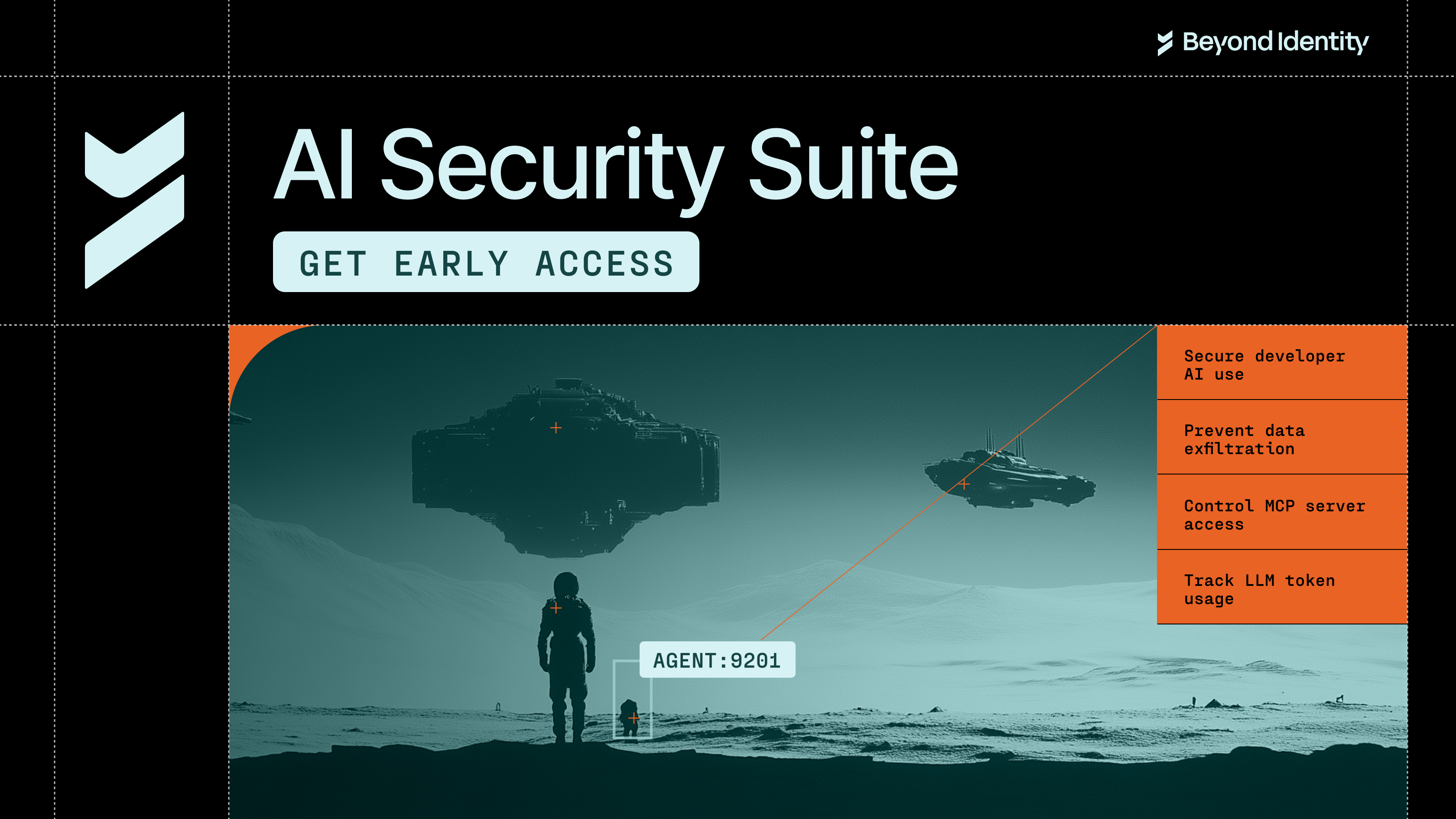
Beyond Identity Opens Early Access for the AI Security Suite
January 22, 2026
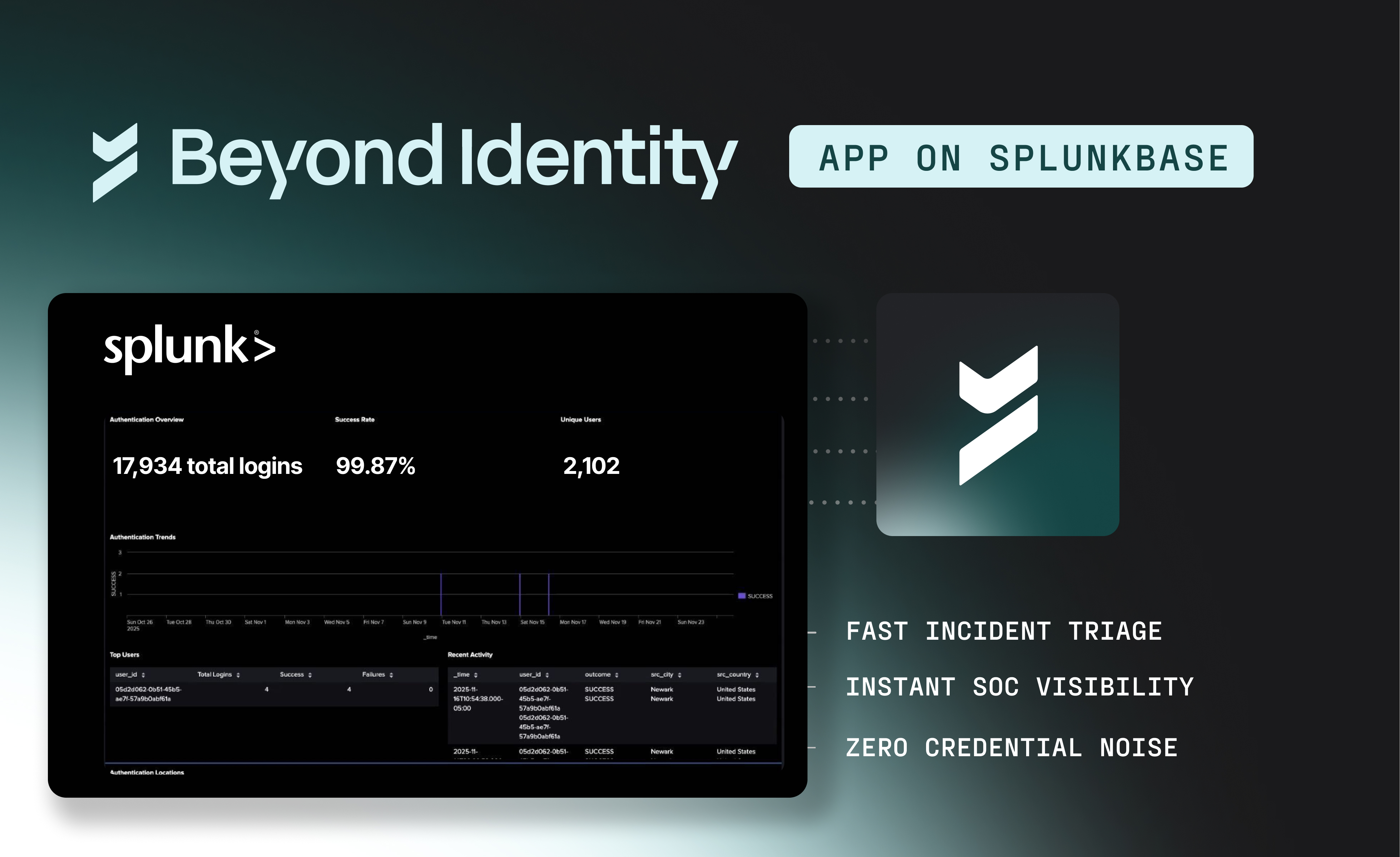
Unlock High-Fidelity Security with the New Beyond Identity App for Splunk
January 16, 2026
Beyond Identity Joins NVIDIA Inception Program to Advance Hardware-Enforced Security for the AI Era
January 5, 2026

Chips and SLSA: Why TPMs Matter for Code Commits
December 19, 2025
.avif)
How Beyond Identity & Nametag Stop Identity Fraud at Onboarding & Recovery
November 19, 2025
.avif)
New: Self Remediation Features to Reduce Help Desk Tickets and Improve UX
November 13, 2025
Make Identity-Based Attacks Impossible
August 11, 2025
Meeting CJIS Compliance with WDL
May 27, 2025
PCI DSS Compliance with Beyond Identity
March 6, 2025
.avif)
Online Job Board Safety: How and Why To Avoid a Scam
March 7, 2024
ChatGPT's Dark Side: Cyber Experts Warn AI Will Aid Cyberattacks in 2023
February 29, 2024
Improving User Access and Identity Management to Address Modern Enterprise Risk
February 20, 2024

Okta Cyber Trust Report
January 5, 2024
Securing Remote Work: Insights into Cyber Threats and Solutions
October 30, 2023

Networking Dinner with MightyID and Tevora
December 9, 2025
Alphinia CISO Mastermind Dinner
December 1, 2025

Myriad360 Client Appreciation Celebration
November 20, 2025
GuidePoint Security Movie Premeire of Wicked
November 19, 2025
.avif)
How AI Is Accelerating Threats: The Inside Scoop on Emerging Phishing GPTs
November 18, 2025

GuidePoint Security 3rd Annual Houston Golf Outing
November 13, 2025
GuidePoint Security's Pinehurst Golf Outing
November 12, 2025
GuidePoint Security Public Sector Vendor Fair
November 5, 2025