AI Security suite

AI security, anchored in hardware

A close-up of a laptop screen displaying a login interface with a scenic background. A hand is preparing to type on the keyboard. Icons for Crowdstrike, Kandji, and Intune are visible at the bottom, indicating security and management features related to Device trust and MFA.A close-up view of a laptop keyboard with a display showing statistics related to device misconfigurations. Key data includes total devices, active status, and pending configurations, emphasizing security aspects like MFA and device trust.
foundation 001

Eliminate the new attack surface

Block AI-powered credential theft and phishingGPT's with passwordless, device-bound authentication that cryptographically ties every login to a specific device.

foundation 002

See your entire AI ecosystem

Prevent compromised devices from accessing resources, committing code, or building with AI agents.

foundation 003

Prevent unauthorized agent actions

Identify deepfake attacks in real-time by continuously verifying both the user and their device during meetings and chats.

foundation 004

Audit and provenance

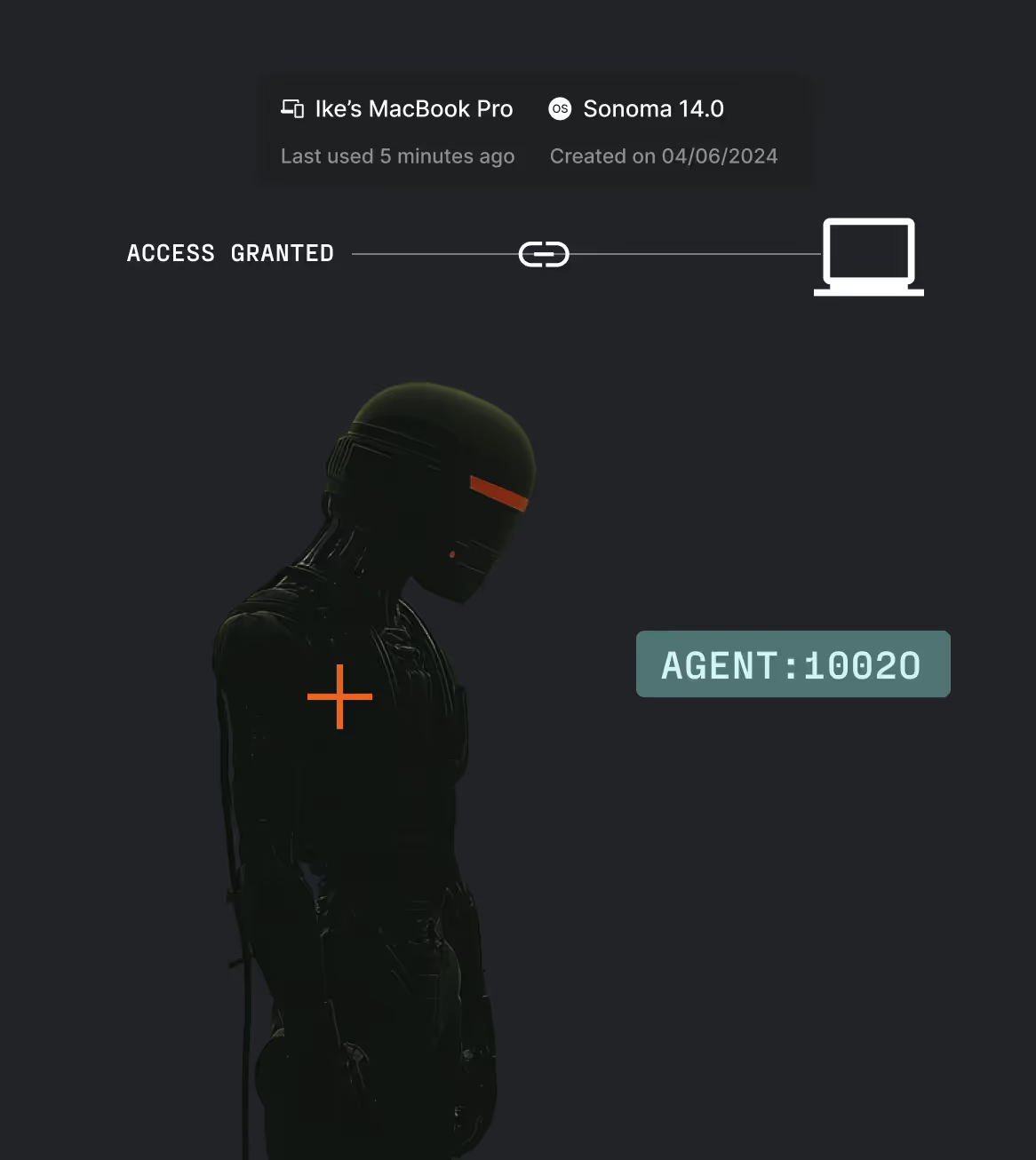
Secure non-human identities and AI agents with the same device-bound authentication and continuous posture verification applied to human users.

Hardware-bound

Hardware-bound agent identity

Eliminate credential and API key sprawl. Keys never leave hardware.

MCP Discovery

MCP server discovery
& control

Map and control every MCP server across your environment. Enforce which servers are allowed, what they can do, and who can invoke them.

continuous enforcement

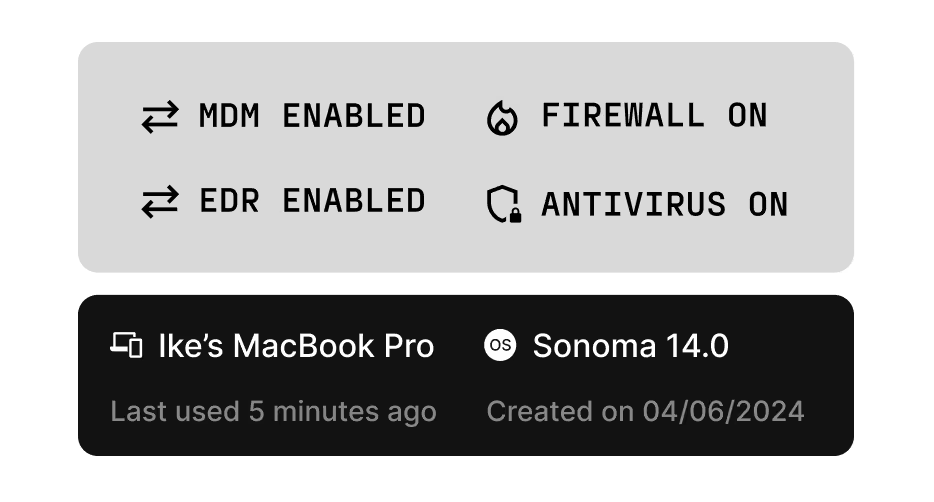
Continuous posture verification

Autonomous trust enforced continuously. Evaluate the security posture of every agent and device.

activity details

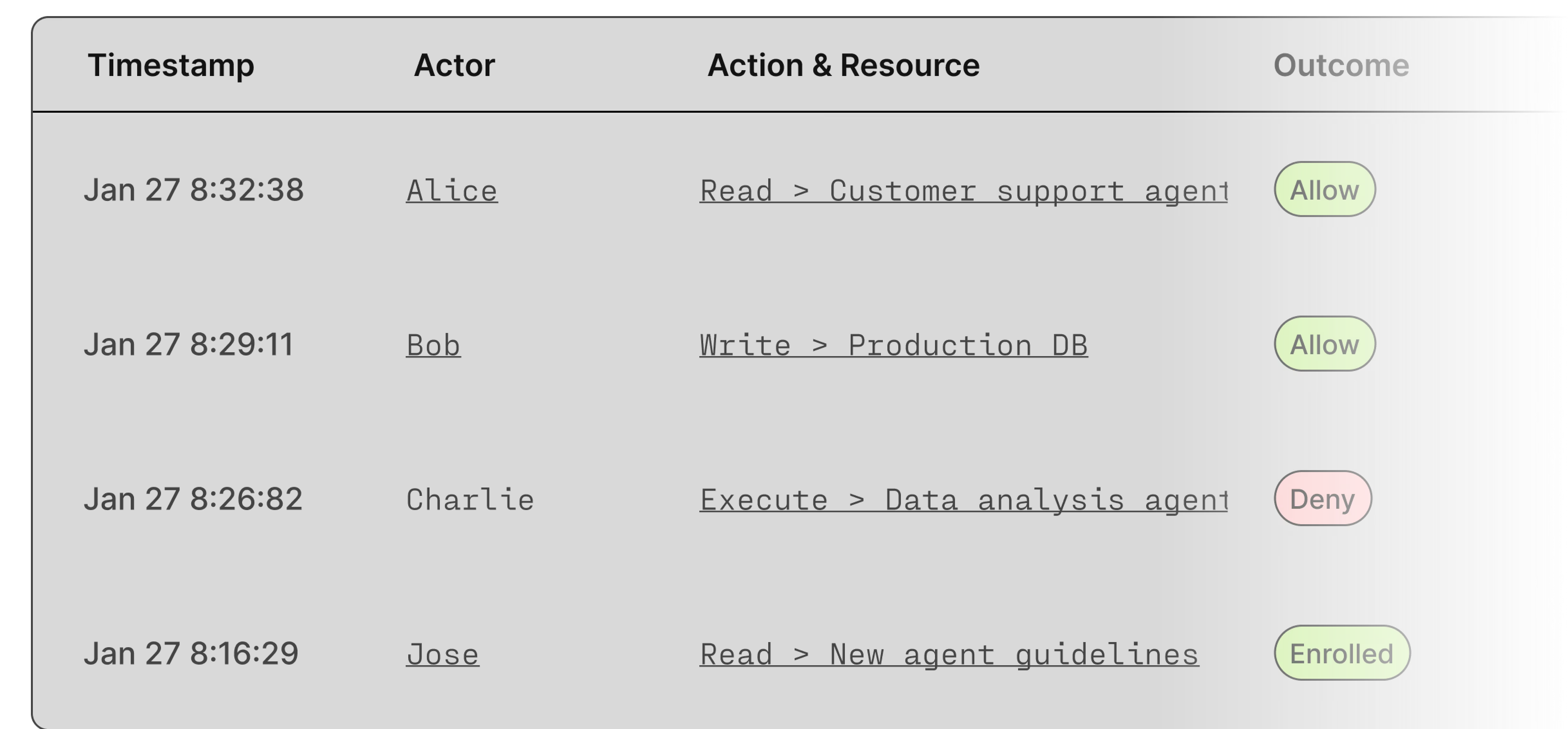
Agent activity tracing

Log the complete identity chain for every agent transaction: which agent, which device, which tool, which user.

granular policies

Policy-based tool authorization

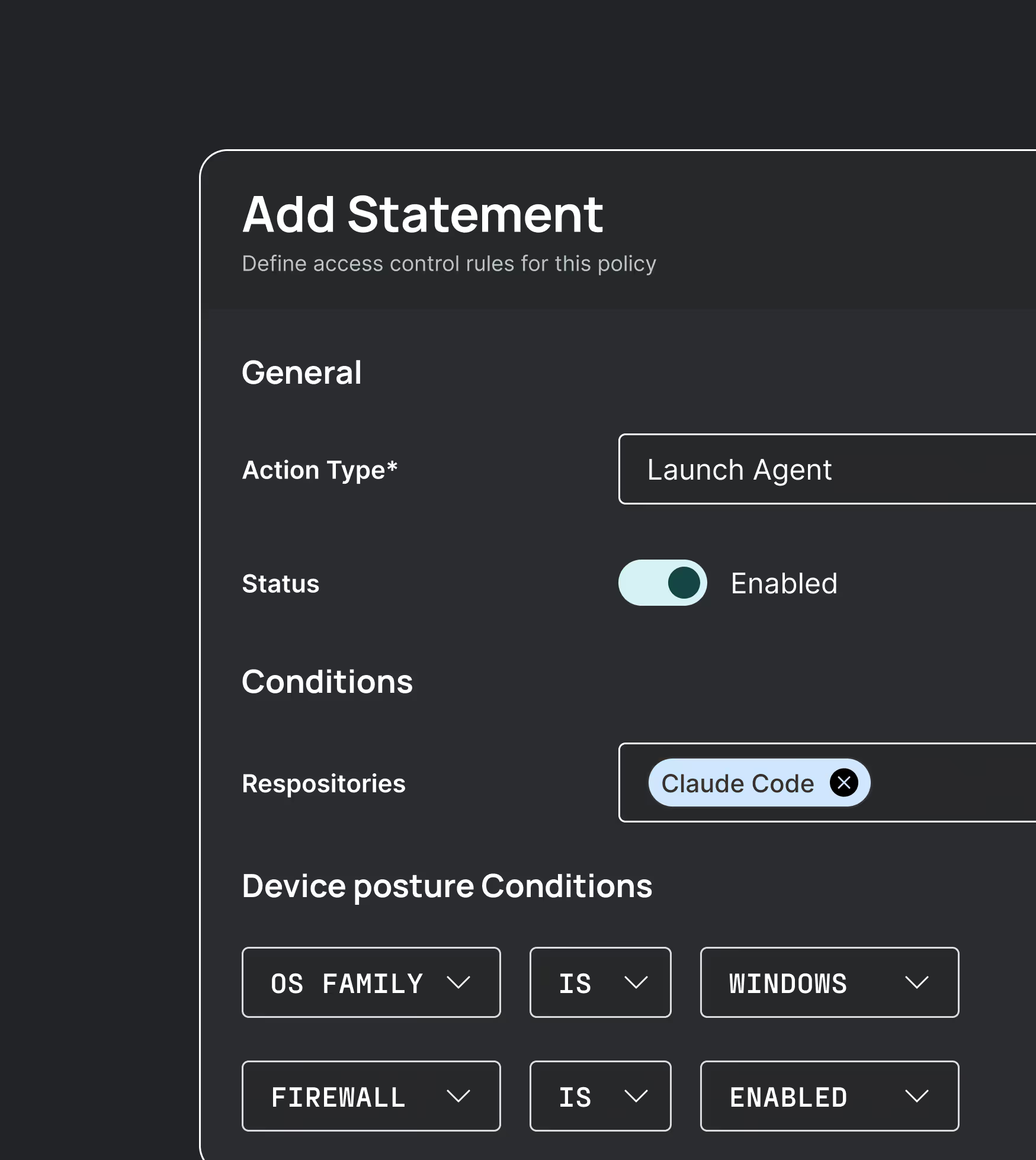
Define granular policies controlling which agents can invoke which tools and access what data based on device posture, user identity, and organizational role.

Built to protect every agent,
on every device

AI agents run everywhere. Traditional security was not designed for non-human identities that act autonomously.

A bar chart titled 'Risky Events Blocked by Policy Rules' displaying the number of blocked risky events per policy rule. The y-axis shows the count of blocked events, reaching over 60, while the x-axis lists policy rules numbered from 8 to 19, with varying counts indicated for each.

Understand your AI attack surface

Catalog every agent: what it does, where it runs, what tools it uses, who it acts for. Visualize relationships between AI agents, users, MCP servers, and data sources.

A flowchart detailing user group settings, showing ‘Executive User Group’ with a checkmark, and three items below: ‘Biometric Enabled,’ ‘OS Version’ with an Apple logo, and ‘Crowdstrike’ with an indicator. Keywords include Device trust, MFA, TPM, and Identity Defense.

Build the foundation for what's next

AI security is evolving. Soon you will need to answer "what data influenced this decision." Hardware-anchored identity is the foundation for context-aware security.

A dashboard displaying risk assessment metrics by users. Categories include 'Biometric not set', 'High frequency authentication', 'Antivirus off', 'FileVault disabled', with a warning indicator for 'Jailbroken' and 'Anomalous authentication'.

Ensure agents only run on trusted devices

Apply device trust verification to agent infrastructure. Managed or unmanaged, cloud or on-prem, every device must meet your posture requirements.

Adversaries Exploit Japanese Brokerage Accounts in $700M Stock Manipulation Spree

A new wave of cyberattacks is causing disruptions in Japan’s financial markets. Here’s a breakdown of what happened and effective mitigation strategies for those looking to protect themselves from similar threats.
View more

What Is Push Bombing? And How Beyond Identity Makes It Impossible

Many organizations still rely on legacy push-based MFA, even as attackers routinely bypass it. The result is security posture that looks strong on paper, but fails in practice.
View more

Scattered Spider: How to Effectively Defend Against This Aggressive Threat

According to cybersecurity researchers, the group is likely to adopt AI-powered impersonation tactics next, making attacks even harder to detect.
View more
AI Security suite

AI security, anchored in hardware

Every agent, action, tool traces back to verified identity.

01
Feature one
Tagline

Medium length section heading goes here

Lorem ipsum dolor sit amet, consectetur adipiscing elit. Suspendisse varius enim in eros elementum tristique. Duis cursus, mi quis viverra ornare, eros dolor interdum nulla, ut commodo diam libero vitae erat.

02
Feature two
Tagline

Medium length section heading goes here

Lorem ipsum dolor sit amet, consectetur adipiscing elit. Suspendisse varius enim in eros elementum tristique. Duis cursus, mi quis viverra ornare, eros dolor interdum nulla, ut commodo diam libero vitae erat.

03
Feature three
Tagline

Medium length section heading goes here

Lorem ipsum dolor sit amet, consectetur adipiscing elit. Suspendisse varius enim in eros elementum tristique. Duis cursus, mi quis viverra ornare, eros dolor interdum nulla, ut commodo diam libero vitae erat.

04
Feature four
Tagline

Medium length section heading goes here

Lorem ipsum dolor sit amet, consectetur adipiscing elit. Suspendisse varius enim in eros elementum tristique. Duis cursus, mi quis viverra ornare, eros dolor interdum nulla, ut commodo diam libero vitae erat.

Eliminate the new attack surface

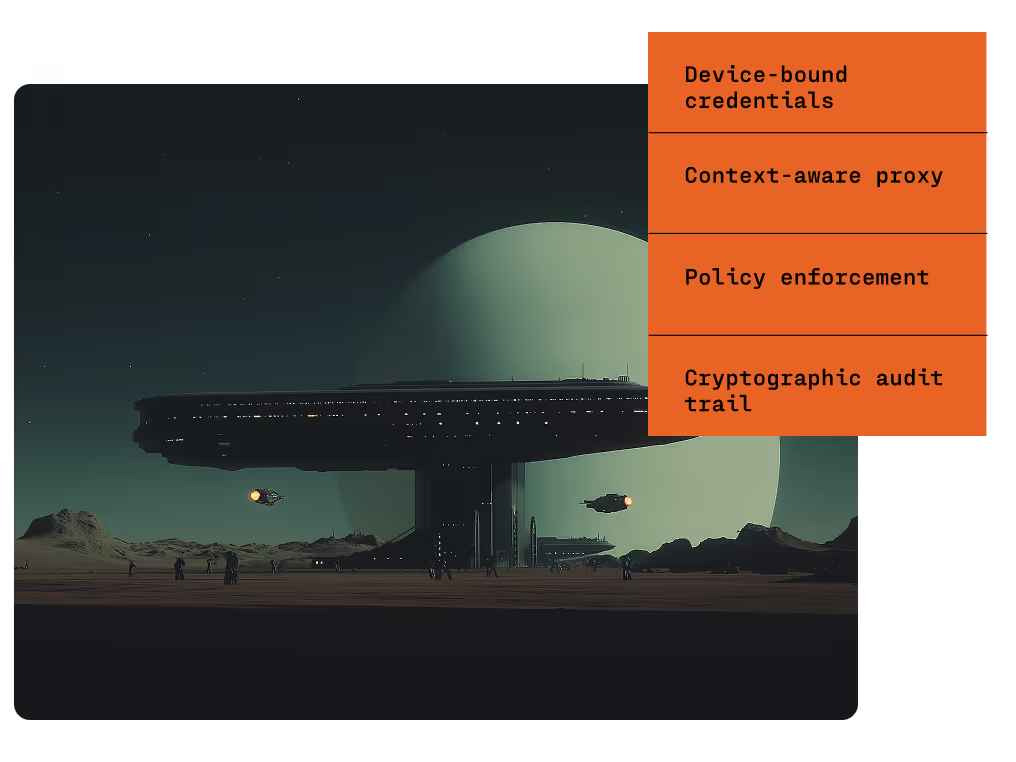
Ensure every autonomous action is cryptographically tied to an identity and verified device.

See your entire AI ecosystem

Discover every MCP server, every agent, and every tool connection across your environment.

Prevent unauthorized agent actions

Enforce deterministic policy on tools, MCP servers, and data accessed.

Audit and provenance

Every agent action, tool invocation, and data access is bound to identity and device context.

01
Hardware-bound

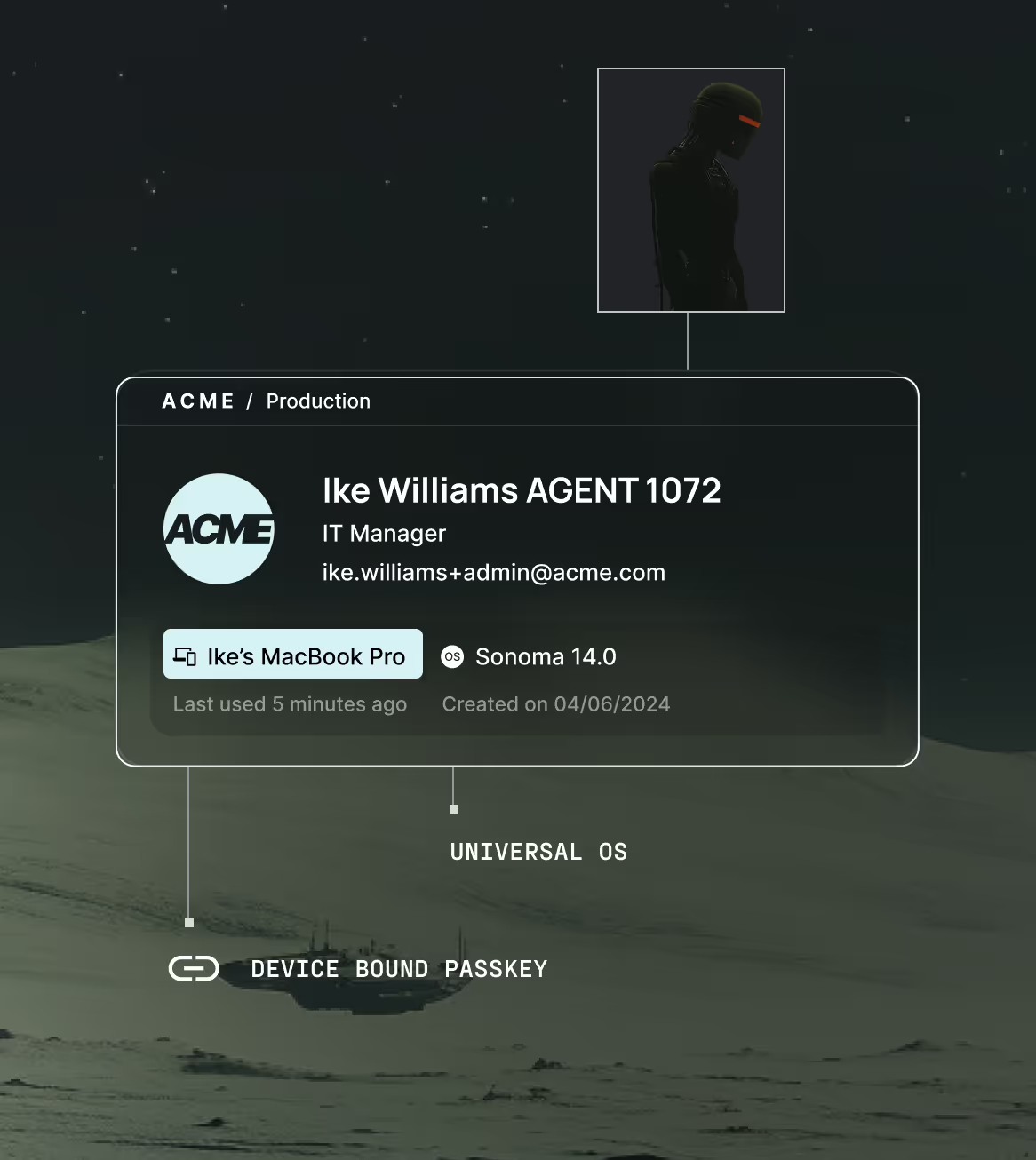
Hardware-bound agent identity

Eliminate credential and API key sprawl. Keys never leave hardware.
02
MCP Discovery

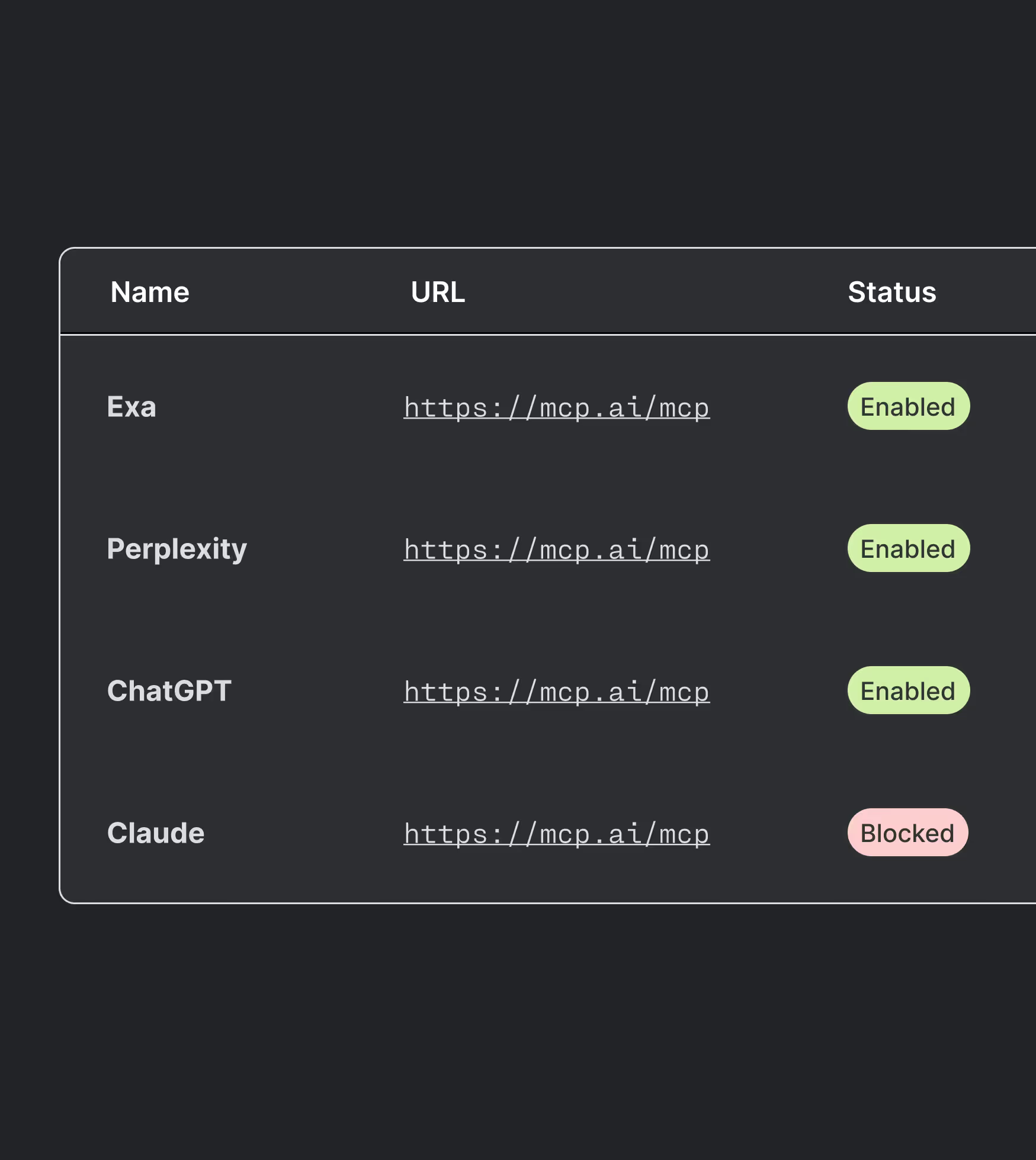
MCP server discovery
& control

Map and control every MCP server across your environment. Enforce which servers are allowed, what they can do, and who can invoke them.
03
Continuous trust

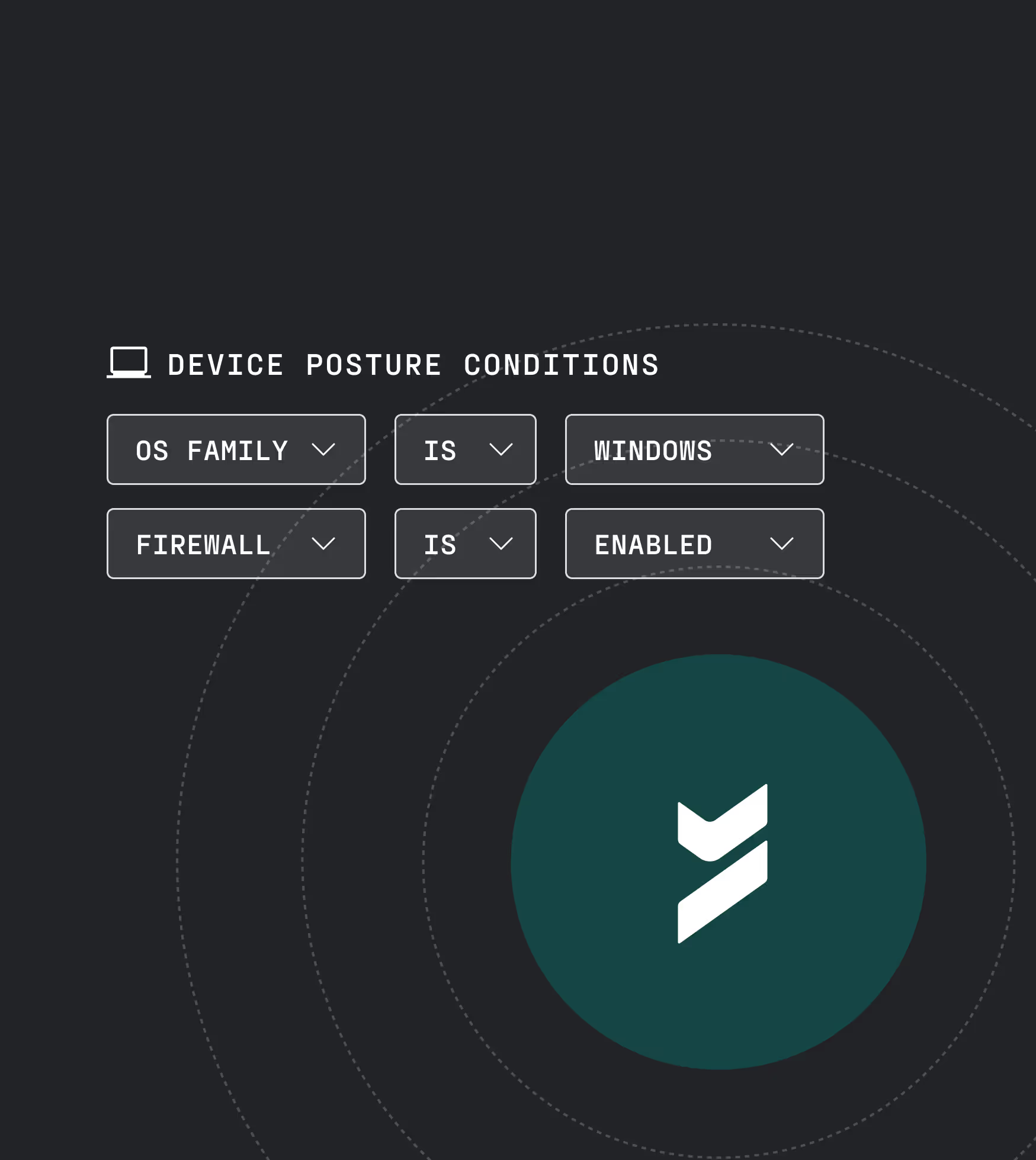
Continuous posture verification

Autonomous trust enforced continuously. Evaluate the security posture of every agent and device.
04
Activity details

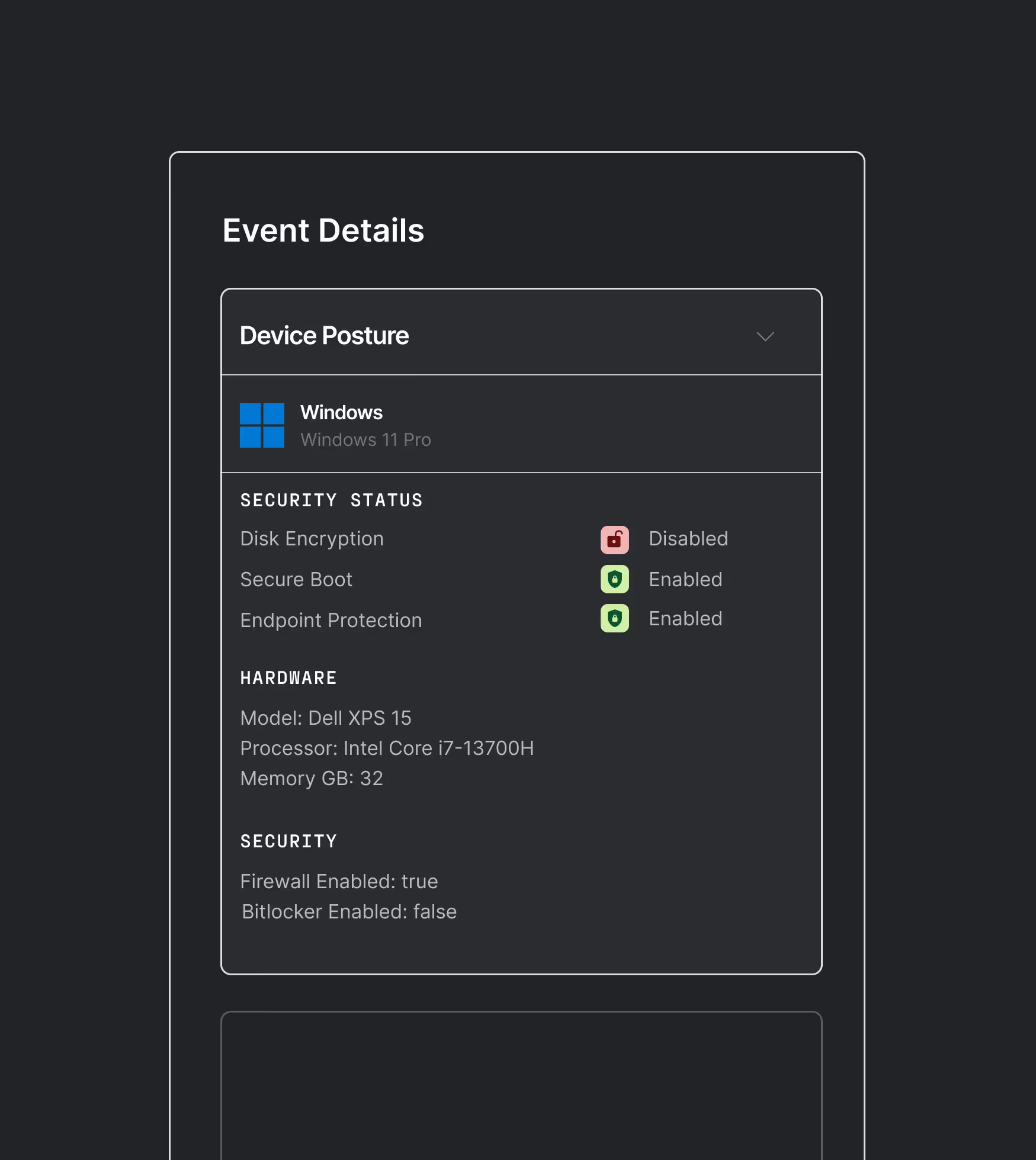
Agent activity tracing

Log the complete identity chain for every agent transaction: which agent, which device, which tool, which user.
05
Enforce least privilege

Policy-based tool authorization

Define granular policies controlling which agents can invoke which tools and access what data based on device posture, user identity, and organizational role.
Dare to do MFA differently

Why Beyond Identity?

Traditional MFA providers leaves organizations exposed to modern threats. Beyond Identity’s phishing-resistant MFA solution prevents those threats at the source.

What is it?

Validating both users and devices continuously, as separate
but equally important requirements for risk-based authentication.

Single-point in time authorization of users only, oftentimes using phishable factors that can leave organizations open to risk.

User experience

Frictionless

Authenticates users through built-in biometrics or device unlock — no codes, links, or second devices required.

Frustrating

Adds friction with passwords, OTPs, push notifications, and secondary devices.

Phishing-resistant

100% Phish-resistant

100% resistant — uses tamper-proof, device-bound cryptographic passkeys.

Vulnerable

Relies on phishable factors like SMS, OTP, or push approvals.

Passwordless 

operation

100% Passwordless

Passwords are fully eliminated across devices and operating systems.

Relies on passwords

Passwords are required for setup or fallback authentication.

Device trust
validation

User and device

Authenticates both user identity and device posture (e.g., OS version, encryption, firewall).

Users only

Focuses on user identity only; device trust is ignored.

Continuous authentication

Always-on

Monitors user and device compliance after login; revokes access if the user or device drifts out of policy.

Static

Performs static checks at login — no reevaluation post-authentication.

Device posture assurance

Continuous

Continuously enforces fine-grained policies across managed and unmanaged devices.

Static

Provides no visibility into device security posture.

Security stack 

integration

Fully integrated

Integrates natively with CrowdStrike, Intune, Jamf, Okta, SentinelOne, and others to enforce conditional access.

Limited

Limited or surface-level integrations, often lacking enforcement.

Security telemetry

Enhanced

Exports cryptographically linked user-device logs to SIEMs (JSON/syslog) for forensic investigation.

Siloed

Siloed logging; minimal context for incident response.

Compliance & 

policy enforcement

Easy

Built-in controls enforce Zero Trust and compliance frameworks (e.g., NIST 800-207) by design.

Complicated

Admins must manually configure controls; inconsistent and hard to scale.

Zero trust readiness

Compliant

Designed from the ground up to enforce Zero Trust — no implicit trust, continuous validation of users and devices.

Immature

Still perimeter-based; lacks continuous trust evaluation.