Silverfort
Real-time protection against identity-based attacks utilizing compromised credentials to access enterprise on-prem or multi-cloud resources.
Challenges
Most enterprises run hybrid environments where legacy applications, on-prem servers, and IT infrastructure still rely on outdated authentication protocols like Kerberos, NTLM, and LDAP. These systems can't natively support modern authentication methods like SAML, OIDC, or OAuth2, creating a significant security gap. Attackers exploit this weakness through credential-based attacks and lateral movement, knowing these resources lack the multi-factor authentication and continuous verification available in cloud applications.
Security teams face a difficult choice: leave critical systems vulnerable or undertake costly, disruptive modernization projects that may not even be technically feasible for some legacy applications. Meanwhile, IT teams struggle to enforce consistent access policies across their entire environment, creating blind spots in their security posture and compliance reporting.
Benefits
With Beyond Identity + Silverfort, security and IT teams can unlock the following:
Reduce Attacks in Legacy Systems
Beyond Identity's device-bound credentials and continuous authentication secure legacy applications, file shares, command-line tools, and infrastructure that couldn't support modern MFA. Silverfort bridges these systems into Beyond Identity as if they were modern web applications, eliminating the authentication gap without requiring code changes or system migrations.
Stop Lateral Movement at the Source
Attackers moving between cloud and on-prem environments hit the same phishing-resistant authentication requirements everywhere. When Silverfort intercepts authentication attempts to legacy resources, it routes them through Beyond Identity's risk engine and passwordless verification, blocking compromised credentials before they can access critical systems.
Enforce Device Security for Every Endpoint Requesting Access
Verify device posture before granting access to any resource, including legacy systems. When users authenticate to on-prem servers, databases, or command-line tools through Silverfort, Beyond Identity confirms the request comes from a trusted, compliant device with valid security controls, not a compromised machine or attacker's system. This prevents unauthorized devices from accessing critical infrastructure, even if an attacker has valid credentials.
Seamless User Experience
Security teams define access policies once in Beyond Identity and Silverfort applies them across all resources: cloud, on-prem, and legacy. This means the same continuous authentication, device trust verification, and risk-based access controls that protect SaaS applications now protect Active Directory, VDI sessions, Remote Desktop, and homegrown applications too.

Deploy Without Disrupting Operations
The integration works agentlessly on the infrastructure side, requiring no changes to applications or end-user devices beyond the Beyond Identity authenticator. IT teams avoid the risk and downtime of modifying legacy systems while immediately extending modern security controls to their entire environment.
Unify Identity Visibility and Response
All authentication attempts, whether to Salesforce or a legacy database, flow through Beyond Identity's platform for logging, monitoring, and threat detection. Security teams can see and respond to identity-based attacks across their full attack surface from a single console, rather than stitching together logs from disparate systems.
Reduce Authentication Infrastructure Complexity
Instead of maintaining separate MFA solutions for legacy systems or deploying multiple agents across your environment, organizations consolidate on Beyond Identity's phishing-resistant authentication for everything. This reduces licensing costs, simplifies operations, and eliminates the security risks that come from running multiple authentication stacks.
Better Together
Silverfort and Beyond Identity together prevent account takeovers in legacy systems. Security teams reduce their attack surface by closing the legacy authentication vulnerability that credential-based attacks exploit, while IT teams gain unified policy enforcement and visibility that actually works across hybrid infrastructure. The result is measurably fewer successful credential compromises and significantly less time spent managing fragmented authentication systems.
Trending Resources

.png)
Your First 5 Minutes with the AI Trust Layer: See What You've Been Missing
February 24, 2026
The Attacker Gave Claude Their API Key: Why AI Agents Need Hardware-Bound Identity
February 2, 2026
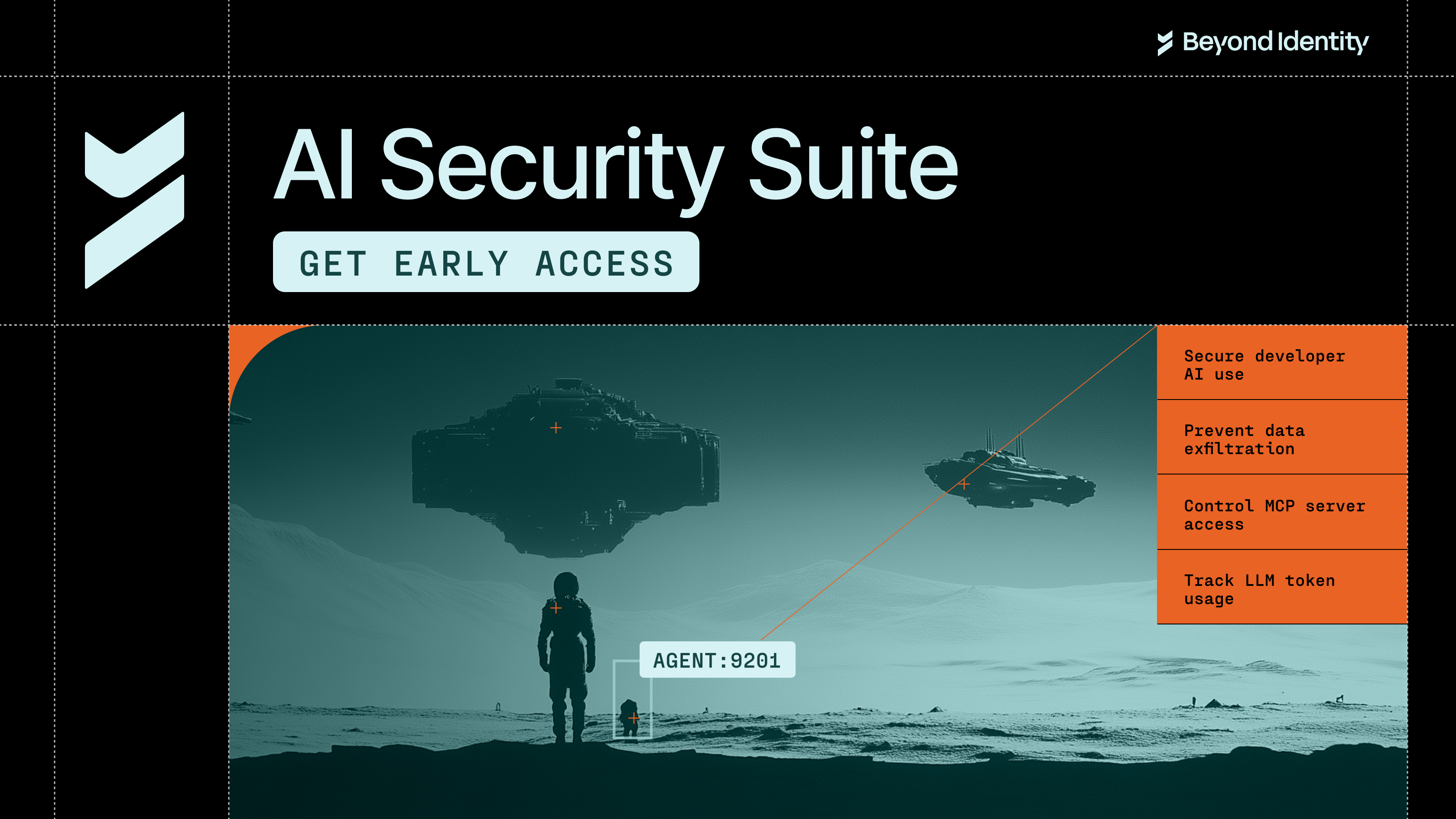
Beyond Identity Opens Early Access for the AI Security Suite
January 22, 2026
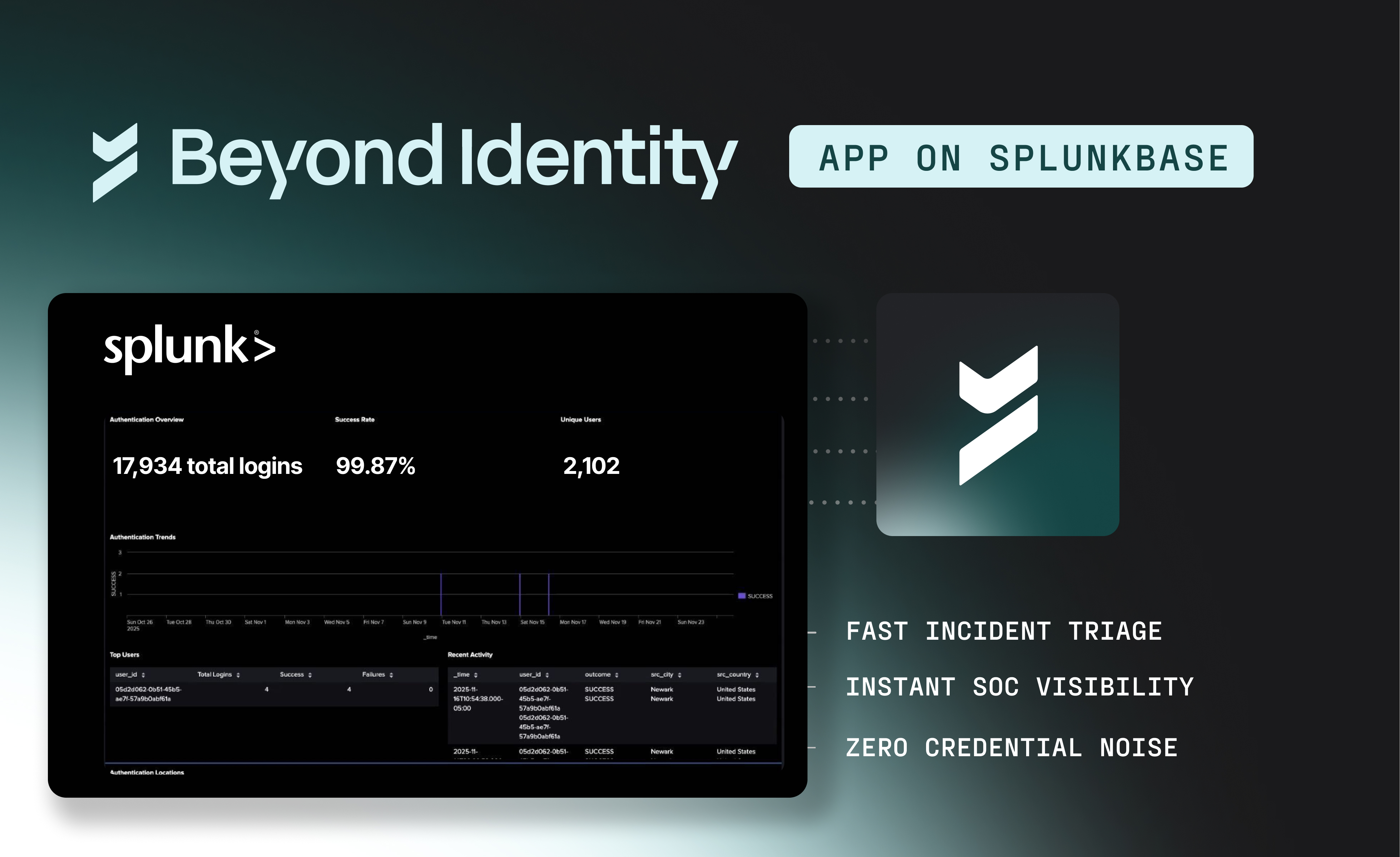
Unlock High-Fidelity Security with the New Beyond Identity App for Splunk
January 16, 2026
Beyond Identity Joins NVIDIA Inception Program to Advance Hardware-Enforced Security for the AI Era
January 5, 2026

Chips and SLSA: Why TPMs Matter for Code Commits
December 19, 2025

Why Is Code Provenance Non-Negotiable in the Age of AI?
December 17, 2025
.avif)
How Beyond Identity & Nametag Stop Identity Fraud at Onboarding & Recovery
November 19, 2025
Make Identity-Based Attacks Impossible
August 11, 2025
Meeting CJIS Compliance with WDL
May 27, 2025
PCI DSS Compliance with Beyond Identity
March 6, 2025
.avif)
Online Job Board Safety: How and Why To Avoid a Scam
March 7, 2024

ChatGPT's Dark Side: Cyber Experts Warn AI Will Aid Cyberattacks in 2023
February 29, 2024
Improving User Access and Identity Management to Address Modern Enterprise Risk
February 20, 2024

Okta Cyber Trust Report
January 5, 2024

Securing Remote Work: Insights into Cyber Threats and Solutions
October 30, 2023

Networking Dinner with MightyID and Tevora
December 9, 2025
Alphinia CISO Mastermind Dinner
December 1, 2025

Myriad360 Client Appreciation Celebration
November 20, 2025
GuidePoint Security Movie Premeire of Wicked
November 19, 2025
.avif)
How AI Is Accelerating Threats: The Inside Scoop on Emerging Phishing GPTs
November 18, 2025

GuidePoint Security 3rd Annual Houston Golf Outing
November 13, 2025
GuidePoint Security's Pinehurst Golf Outing
November 12, 2025
GuidePoint Security Public Sector Vendor Fair
November 5, 2025