
Splunk
Transform your Splunk SIEM from reactive to predictive by feeding it high-fidelity, device-bound authentication data that eliminates credential noise and accelerates threat detection.
Splunk customers that add Beyond Identity's phishing-resistant, device-bound authentication to their security stack report zero credential-based attacks and dramatically faster incident investigation. By replacing low-fidelity authentication logs with cryptographically verifiable device posture data, security teams gain:
- High-confidence signals needed to power correlation searches
- Unmanaged device access visibility & control
- Risk-based alerts from immutable, device-rich auth logs
- Automated SOAR playbooks without manual field mapping or custom parsing
Challenge
Your SIEM is only as powerful as the data you feed it. Traditional authentication methods generate noisy, low-fidelity logs that force analysts to sift through false positives and credential stuffing attempts. When your authentication logs rely on passwords, push notifications, or OTPs, Splunk can tell you that someone logged in, but it cannot tell you if the device was secure or if the user was actually who they claimed to be.
Without cryptographic proof of device identity, security teams face a critical visibility gap:
- Low Signal Quality: Password-based authentication creates massive log volumes dominated by brute force attempts, credential stuffing, and failed MFA pushes that obscure genuine threats and overwhelm analysts with false positives.
- Missing Device Context: Splunk Enterprise Security can correlate authentication events with network and endpoint data, but traditional auth logs provide no native device integrity signals at the moment of login (especially on unmanaged devices), forcing analysts to manually enrich events across multiple tools.
- Manual Integration Overhead: Getting authentication data into a usable format within Splunk historically required parsing raw JSON, building custom field extractions, and maintaining schema mappings that break with each vendor update.
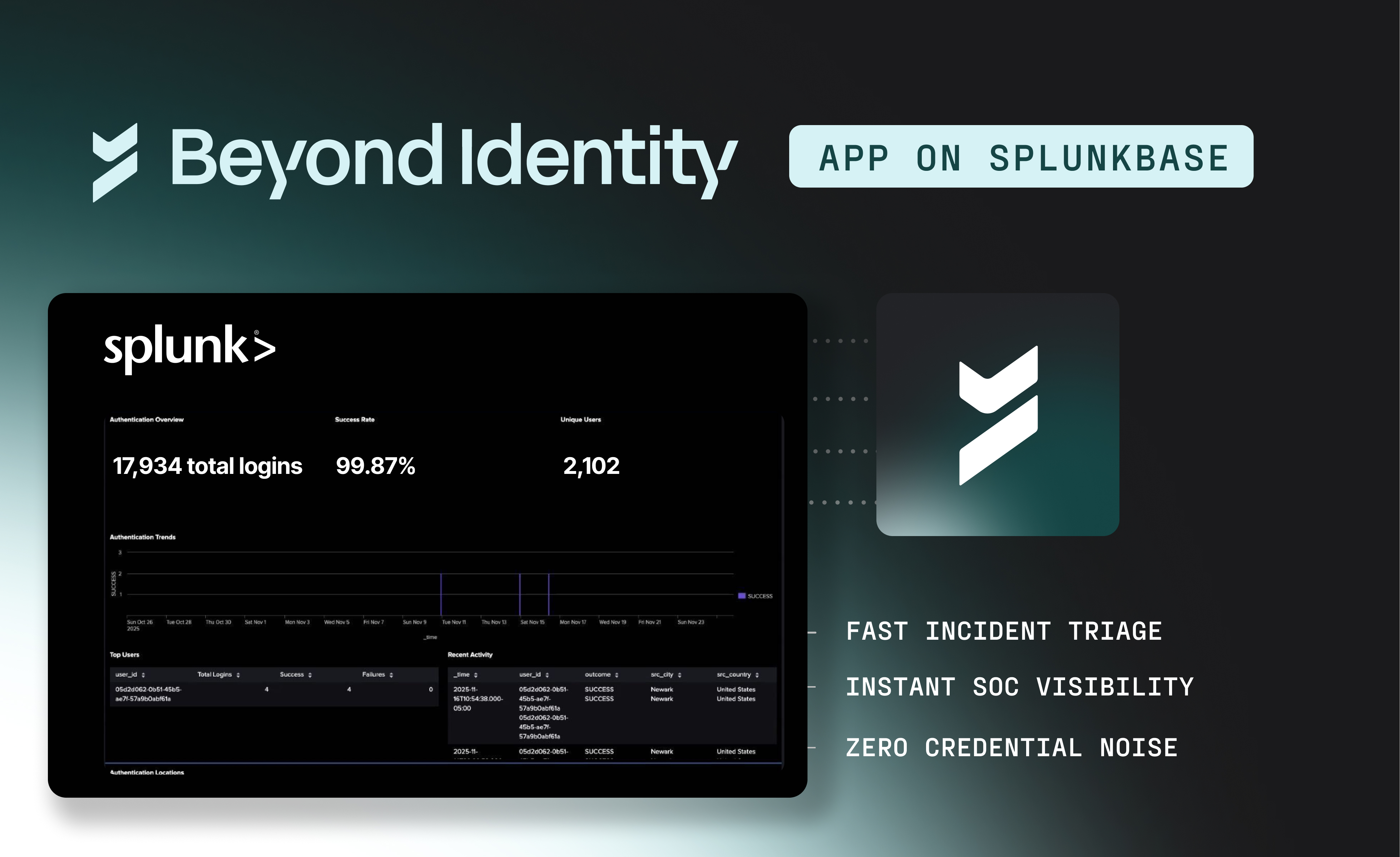
Benefits
Eliminate Credential Noise from Your SIEM
Cryptographically bind identity to hardware-backed security on each device (managed or unmanaged), where the private key never leaves the TPM or secure enclave. This architecture eliminates the entire class of credential-based attacks at the source. Splunk no longer ingests brute force attempts, credential stuffing, or phishing-related authentication failures because these attacks cannot reach your authentication endpoint. Your analysts focus on genuine risk signals rather than sorting through thousands of failed login attempts that never posed a real threat.
Feed Splunk High-Fidelity Device Posture Data
Every Beyond Identity authentication delivers dozens of device security signals directly to Splunk, including OS version, encryption status, firewall state, and biometric capability. This data arrives normalized and CIM-compliant, ready to power Enterprise Security correlation searches. When Splunk flags an authentication event as risky, it represents a cryptographically verified device integrity violation, not a probabilistic guess based on user behavior analytics.
Accelerate Incident Investigation with Immutable Audit Trails
Generate a signed, machine-verifiable record of every authentication transaction that includes the full device security posture at the moment of login. When analysts investigate an incident in Splunk, they can immediately reconstruct which device accessed which application with what security posture, without manually correlating logs across endpoint, network, and identity systems. This immutable audit trail provides the high-confidence evidence needed for forensic analysis and compliance reporting.
Deploy in Minutes with Pre-Built CIM Mappings
Install the app from Splunkbase and immediately gain access to pre-built dashboards and CIM-compliant event mappings. Your authentication data flows directly into Splunk Enterprise Security correlation searches and notable events without custom parsing or field extraction.
Power SOAR Playbooks with Trustworthy Signals
When your authentication data arrives with cryptographic confidence and full device context, SOAR playbooks can take decisive automated action. A Beyond Identity risk signal in Splunk represents an actual device integrity violation, not a probabilistic anomaly that requires manual validation. Your playbooks can automatically isolate compromised devices, trigger step-up authentication, or block access to sensitive applications based on specific posture violations like disabled encryption or missing endpoint security.
Secure Unmanaged and Contractor Devices
Extend device visibility to the endpoints that typically create blind spots in your Splunk monitoring. Contractor laptops, unmanaged BYOD devices, and temporary access scenarios all deliver the same high-fidelity device posture data as corporate endpoints. Your Splunk dashboards visualize the security health of every device accessing your network, regardless of whether IT manages the endpoint, giving security teams complete authentication visibility without forcing device enrollment into MDM systems.
Better Together
Splunk customers that secure their authentication layer with Beyond Identity gain the high-fidelity signals needed to transform their SIEM from a reactive log aggregator into a predictive security platform. By eliminating credential noise and feeding Splunk cryptographically verified device posture data, security teams accelerate threat detection, streamline incident investigation, and power automated response with the confidence that comes from immutable, hardware-backed authentication signals.
Trending Resources

.png)
Your First 5 Minutes with the AI Trust Layer: See What You've Been Missing
February 24, 2026
The Attacker Gave Claude Their API Key: Why AI Agents Need Hardware-Bound Identity
February 2, 2026
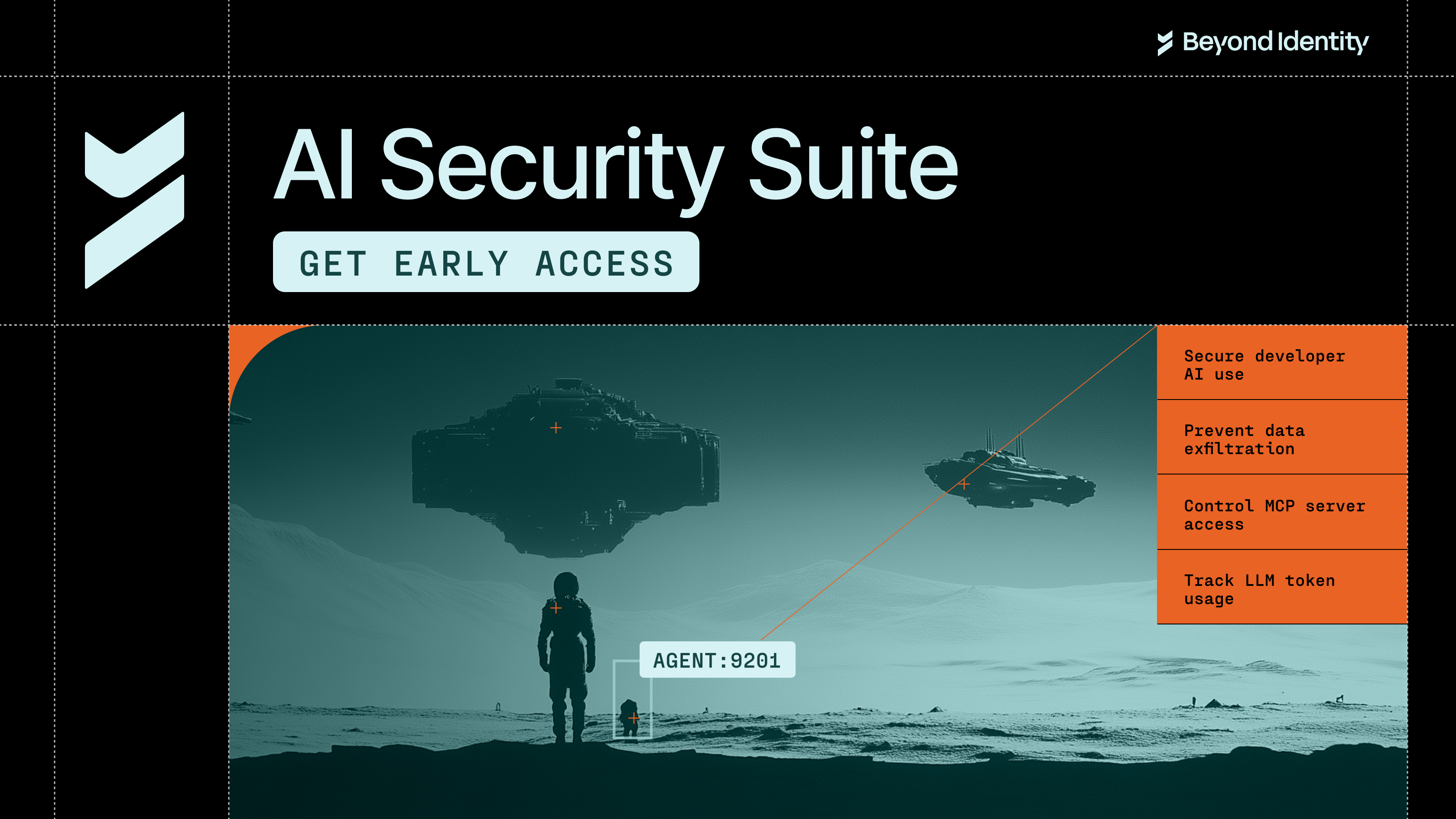
Beyond Identity Opens Early Access for the AI Security Suite
January 22, 2026
Unlock High-Fidelity Security with the New Beyond Identity App for Splunk
January 16, 2026
Beyond Identity Joins NVIDIA Inception Program to Advance Hardware-Enforced Security for the AI Era
January 5, 2026

Chips and SLSA: Why TPMs Matter for Code Commits
December 19, 2025

Why Is Code Provenance Non-Negotiable in the Age of AI?
December 17, 2025
.avif)
How Beyond Identity & Nametag Stop Identity Fraud at Onboarding & Recovery
November 19, 2025
Make Identity-Based Attacks Impossible
August 11, 2025
Meeting CJIS Compliance with WDL
May 27, 2025
PCI DSS Compliance with Beyond Identity
March 6, 2025
.avif)
Online Job Board Safety: How and Why To Avoid a Scam
March 7, 2024
ChatGPT's Dark Side: Cyber Experts Warn AI Will Aid Cyberattacks in 2023
February 29, 2024
Improving User Access and Identity Management to Address Modern Enterprise Risk
February 20, 2024

Okta Cyber Trust Report
January 5, 2024

Securing Remote Work: Insights into Cyber Threats and Solutions
October 30, 2023

Networking Dinner with MightyID and Tevora
December 9, 2025
Alphinia CISO Mastermind Dinner
December 1, 2025

Myriad360 Client Appreciation Celebration
November 20, 2025
GuidePoint Security Movie Premeire of Wicked
November 19, 2025
.avif)
How AI Is Accelerating Threats: The Inside Scoop on Emerging Phishing GPTs
November 18, 2025

GuidePoint Security 3rd Annual Houston Golf Outing
November 13, 2025
GuidePoint Security's Pinehurst Golf Outing
November 12, 2025
GuidePoint Security Public Sector Vendor Fair
November 5, 2025